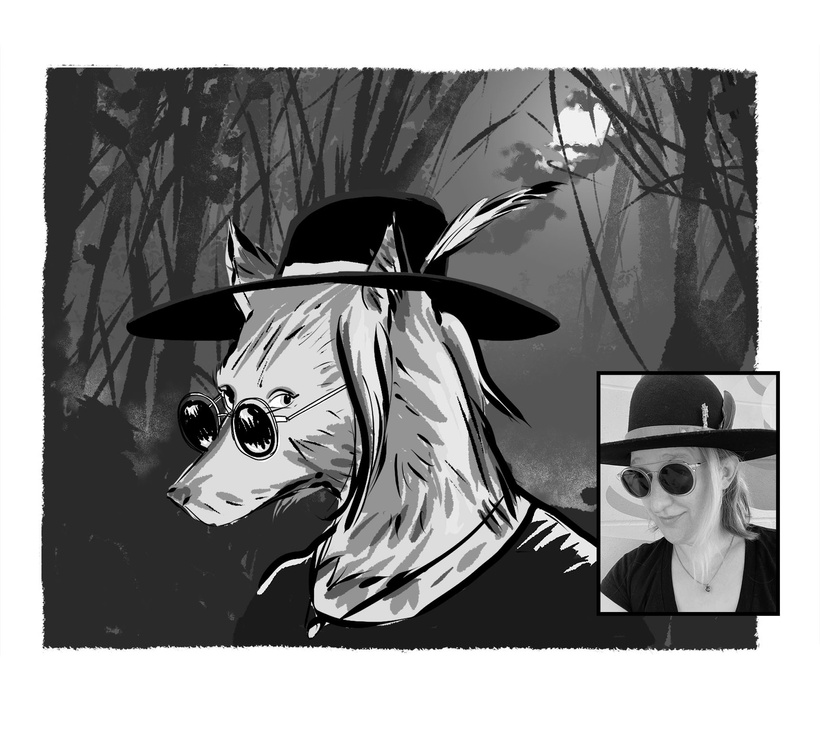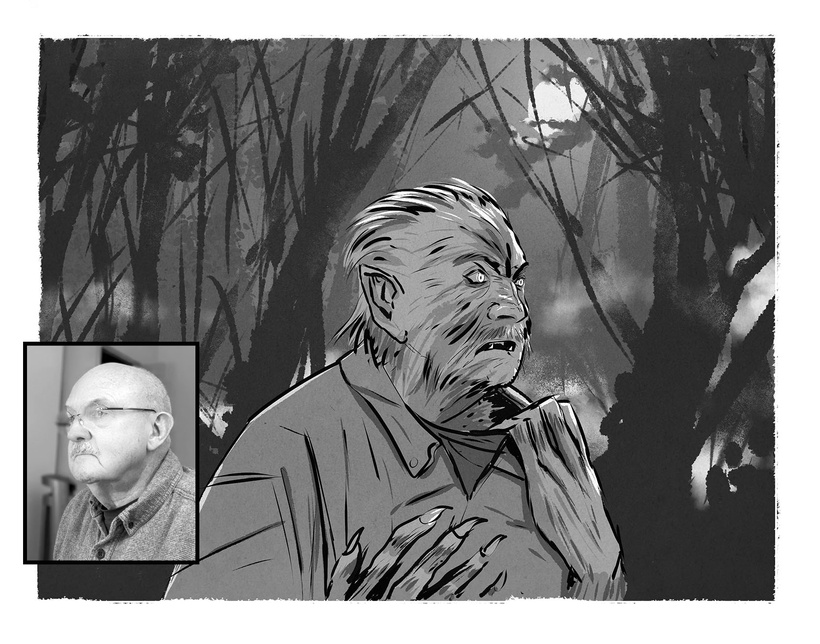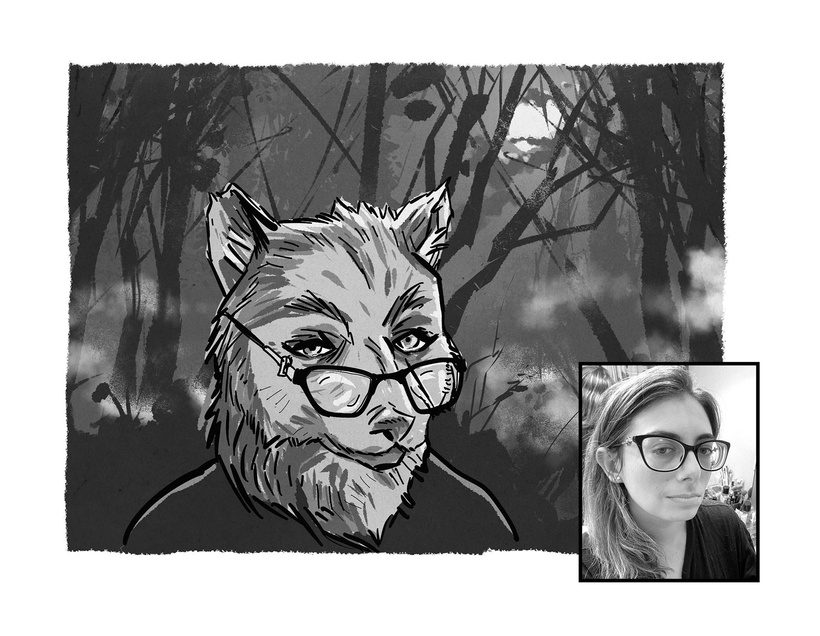
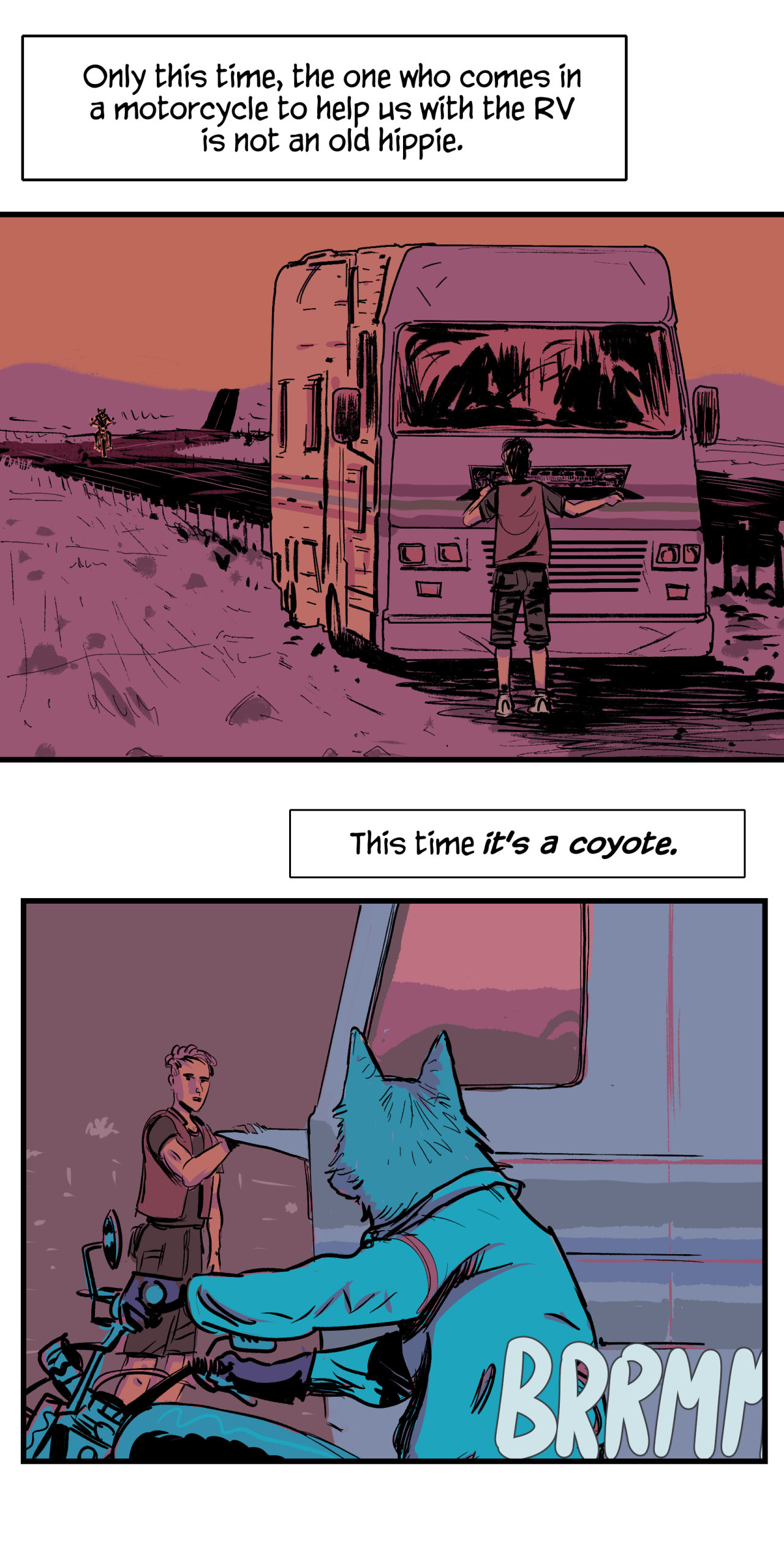
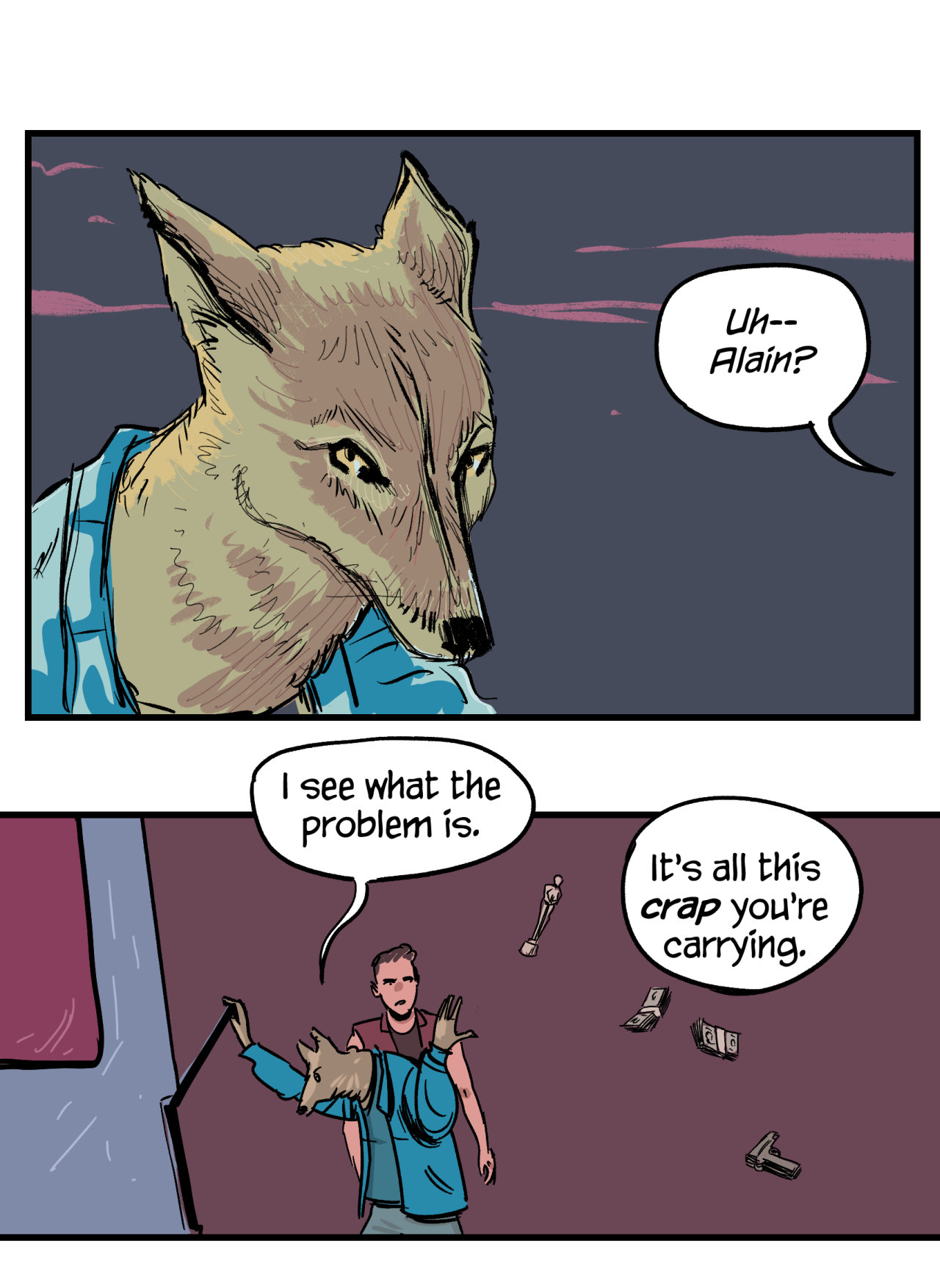
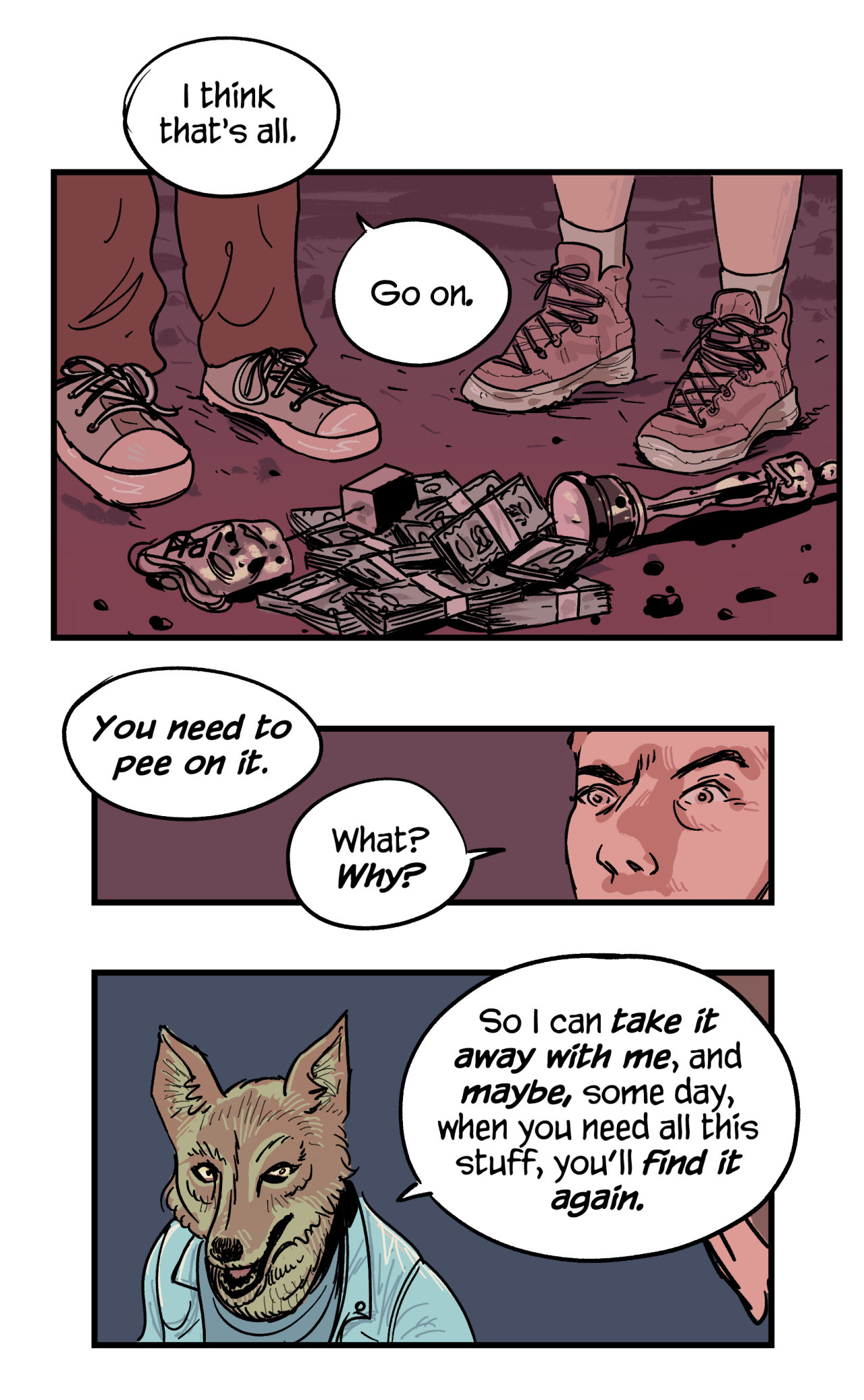
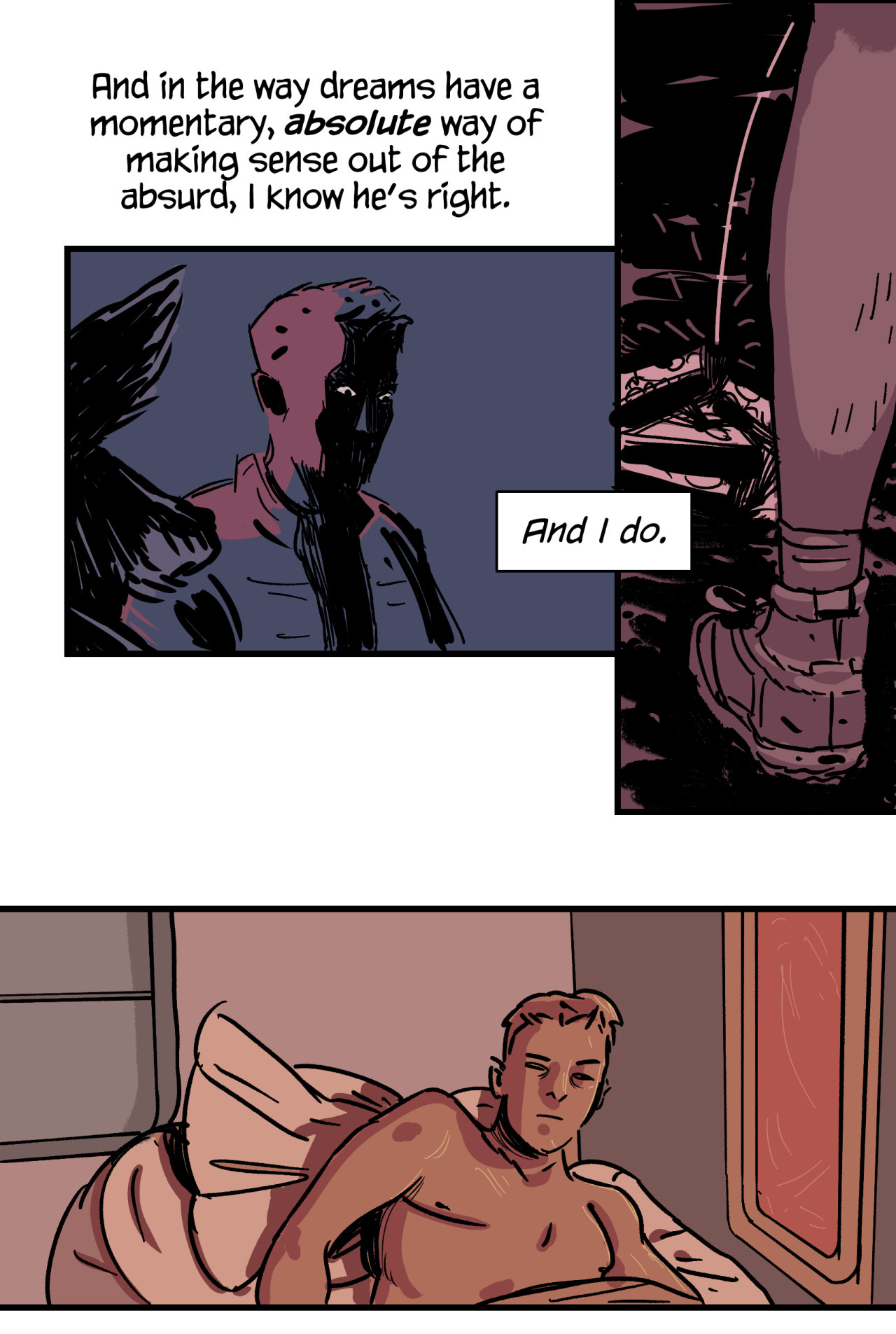
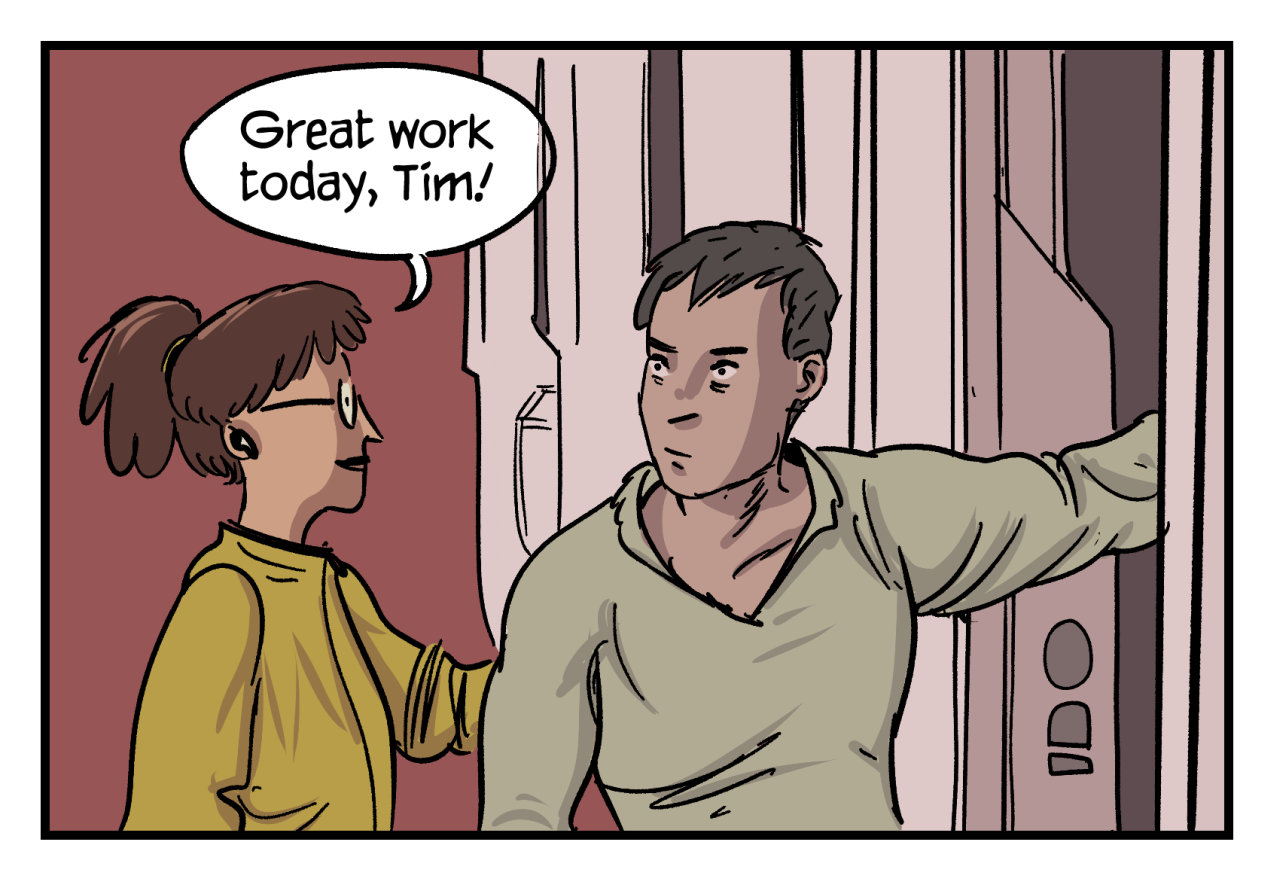
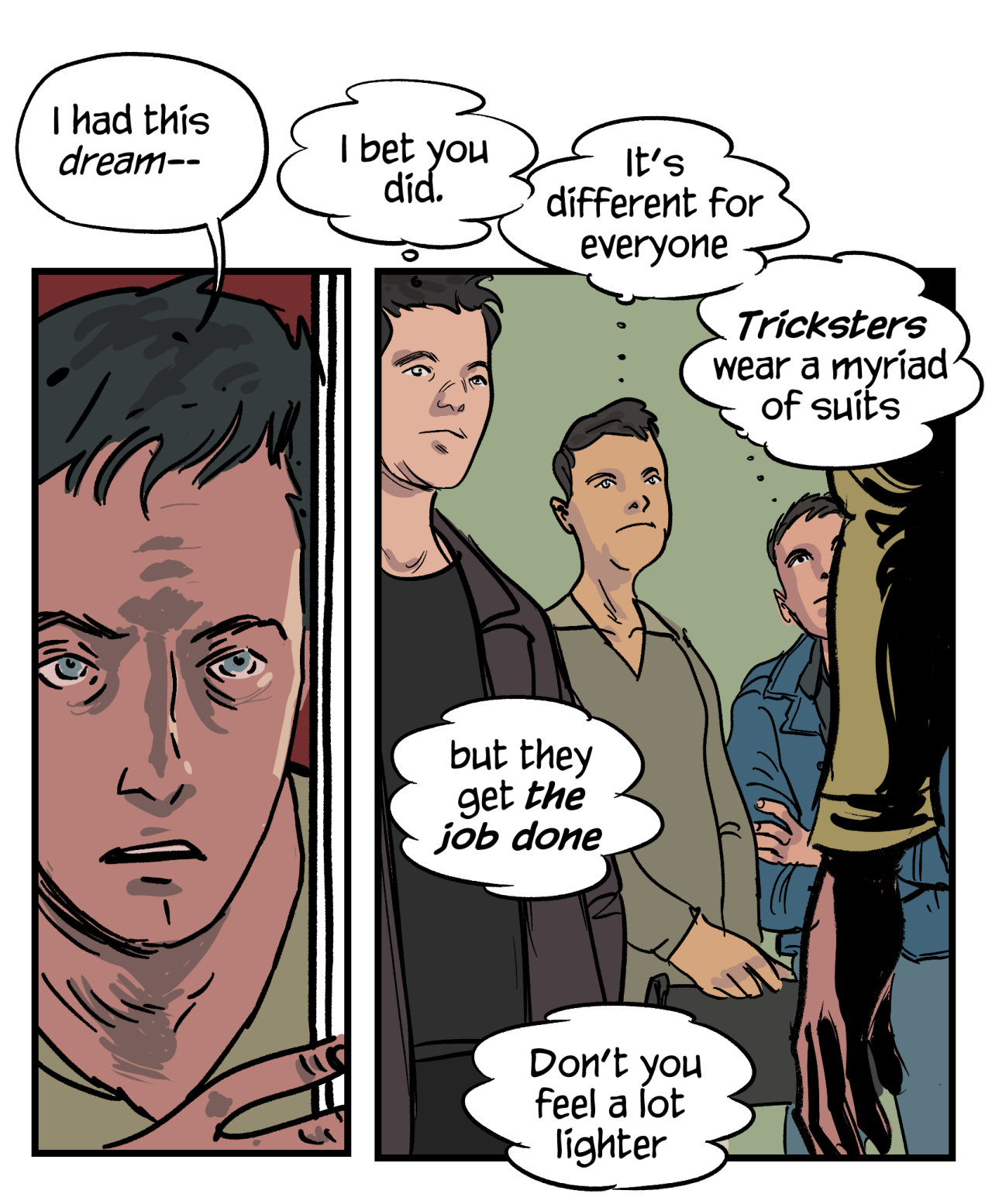
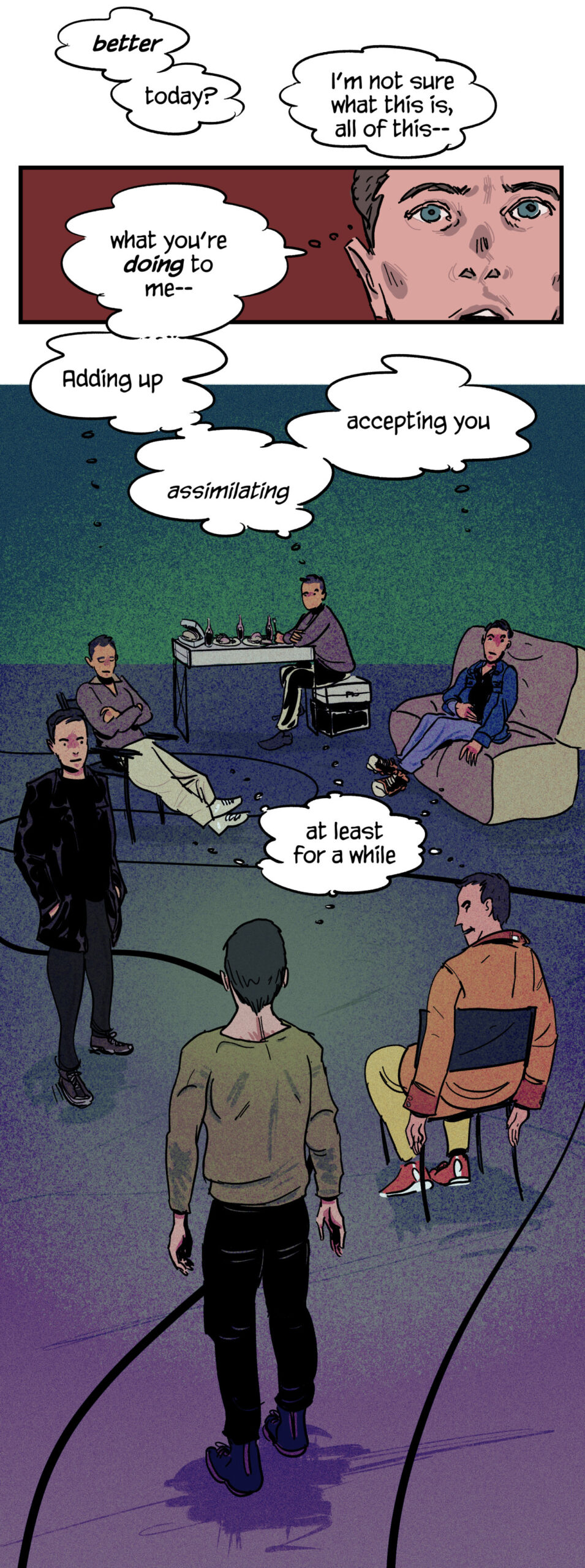
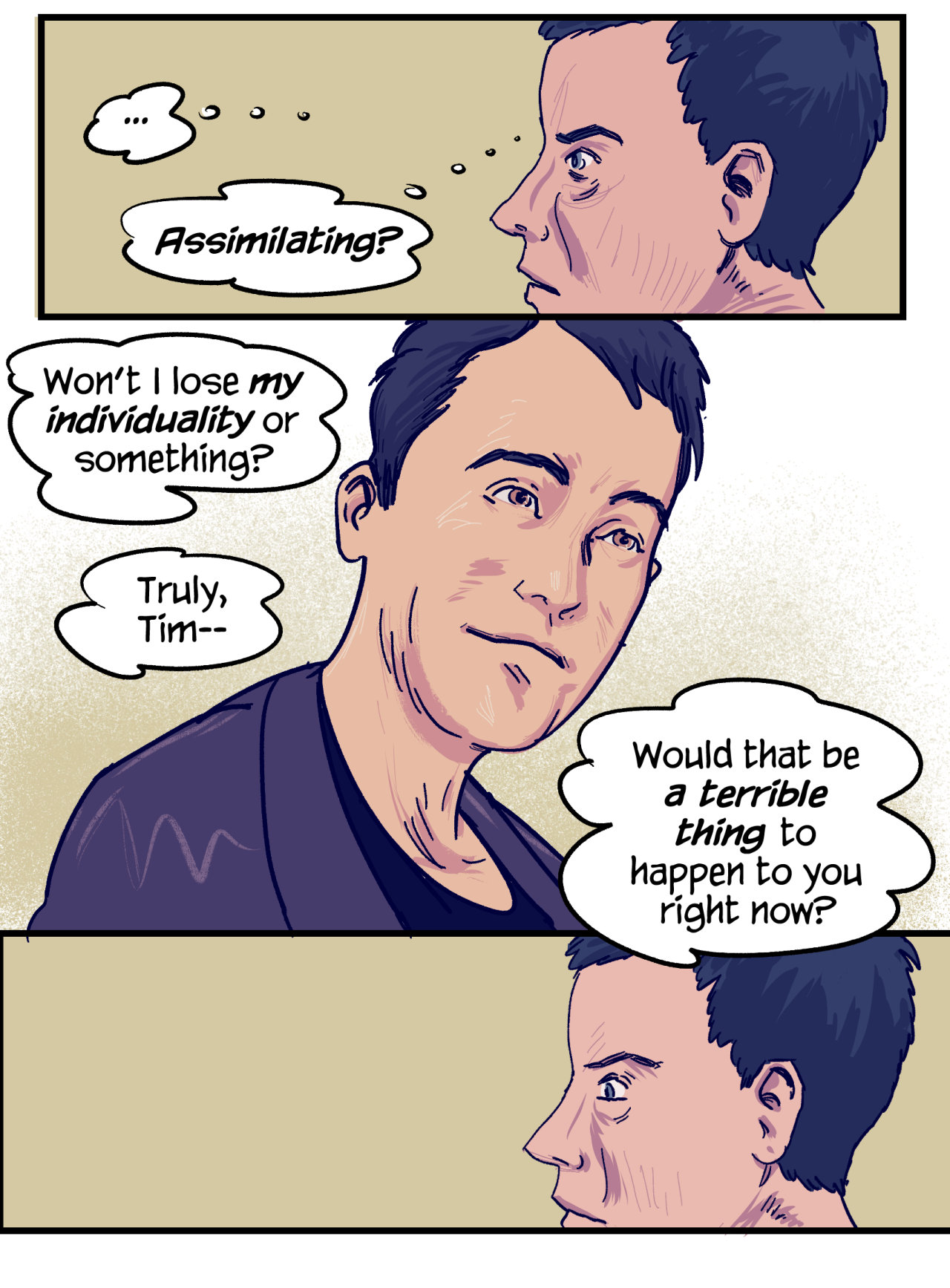
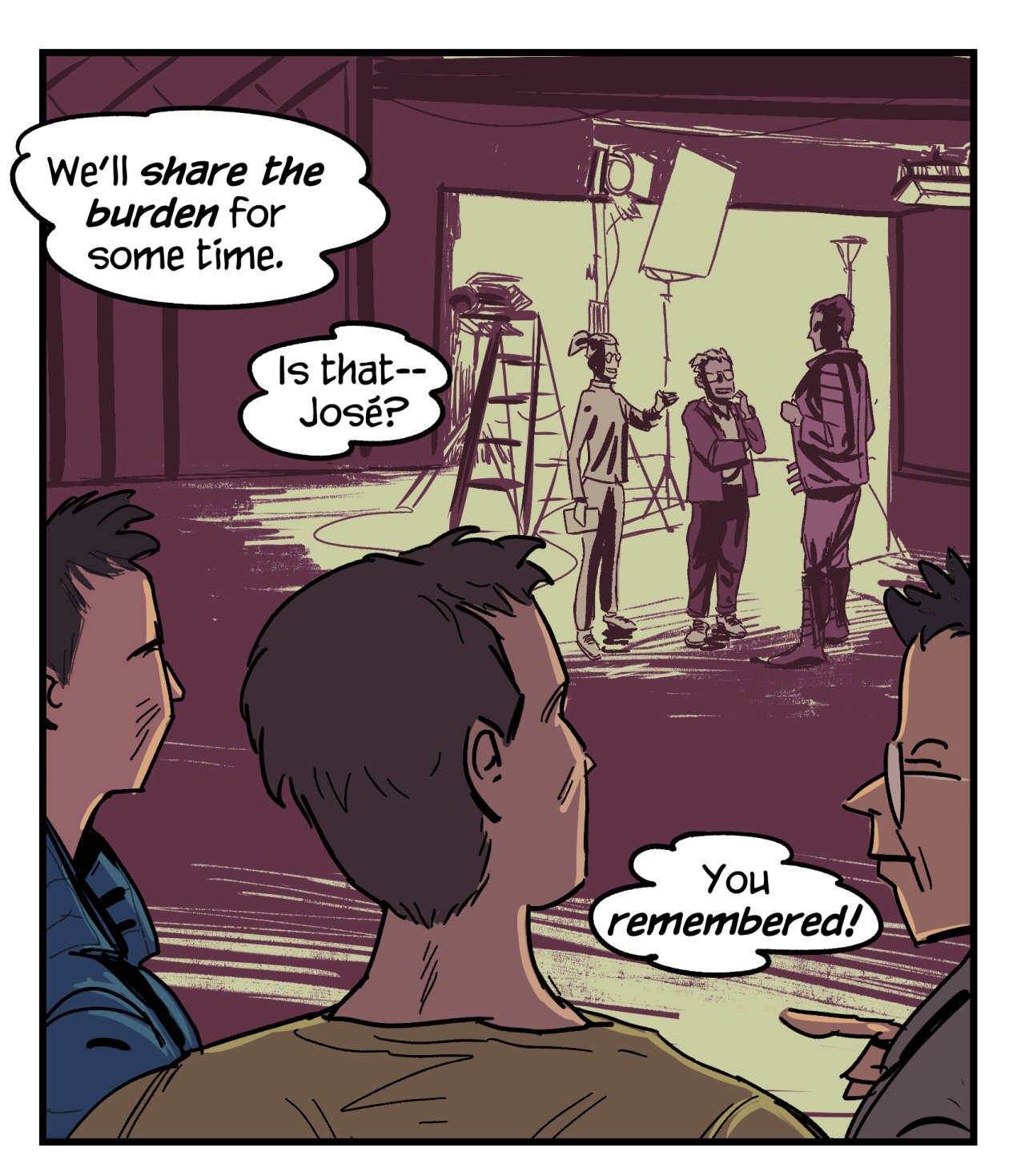
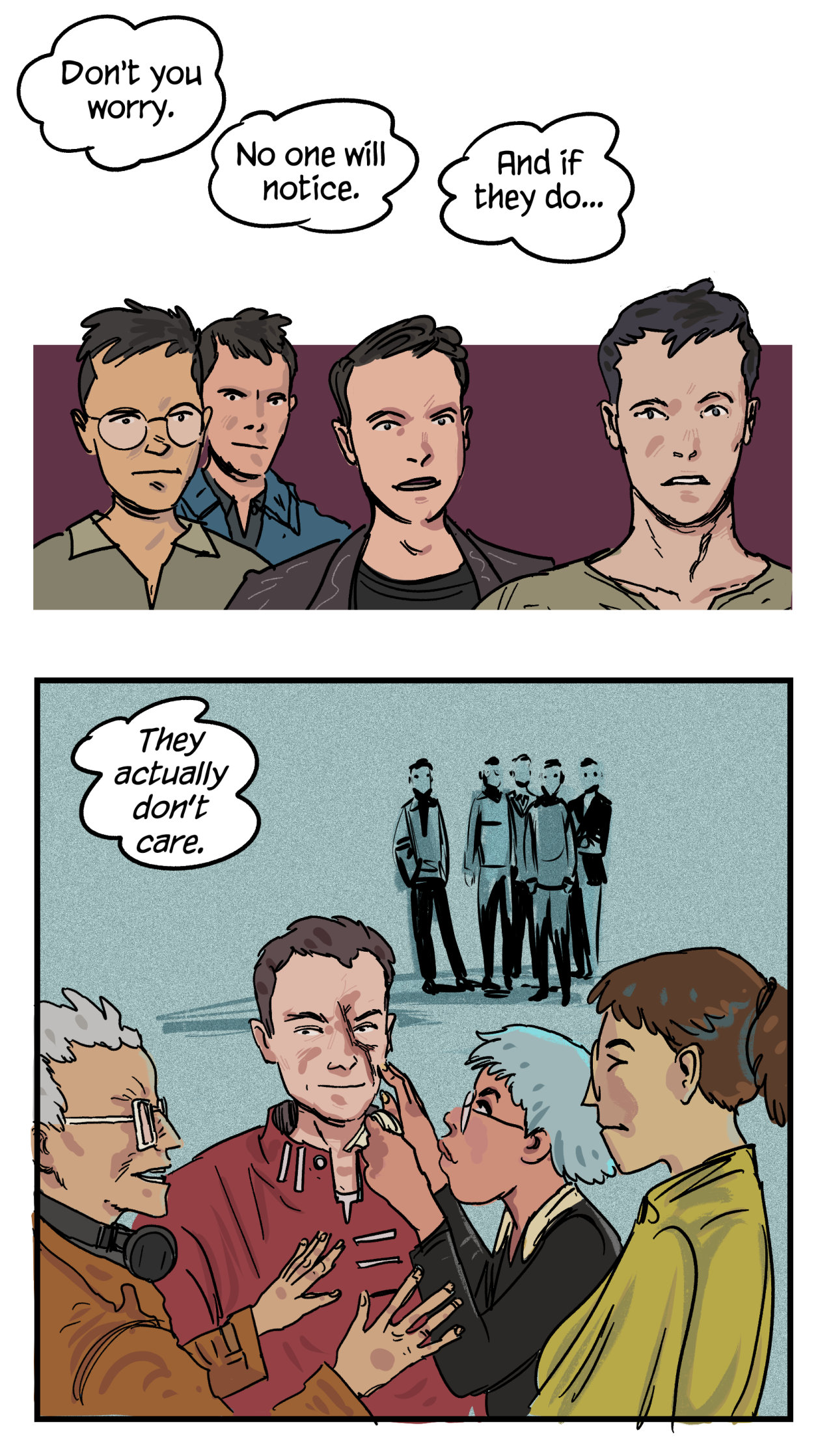
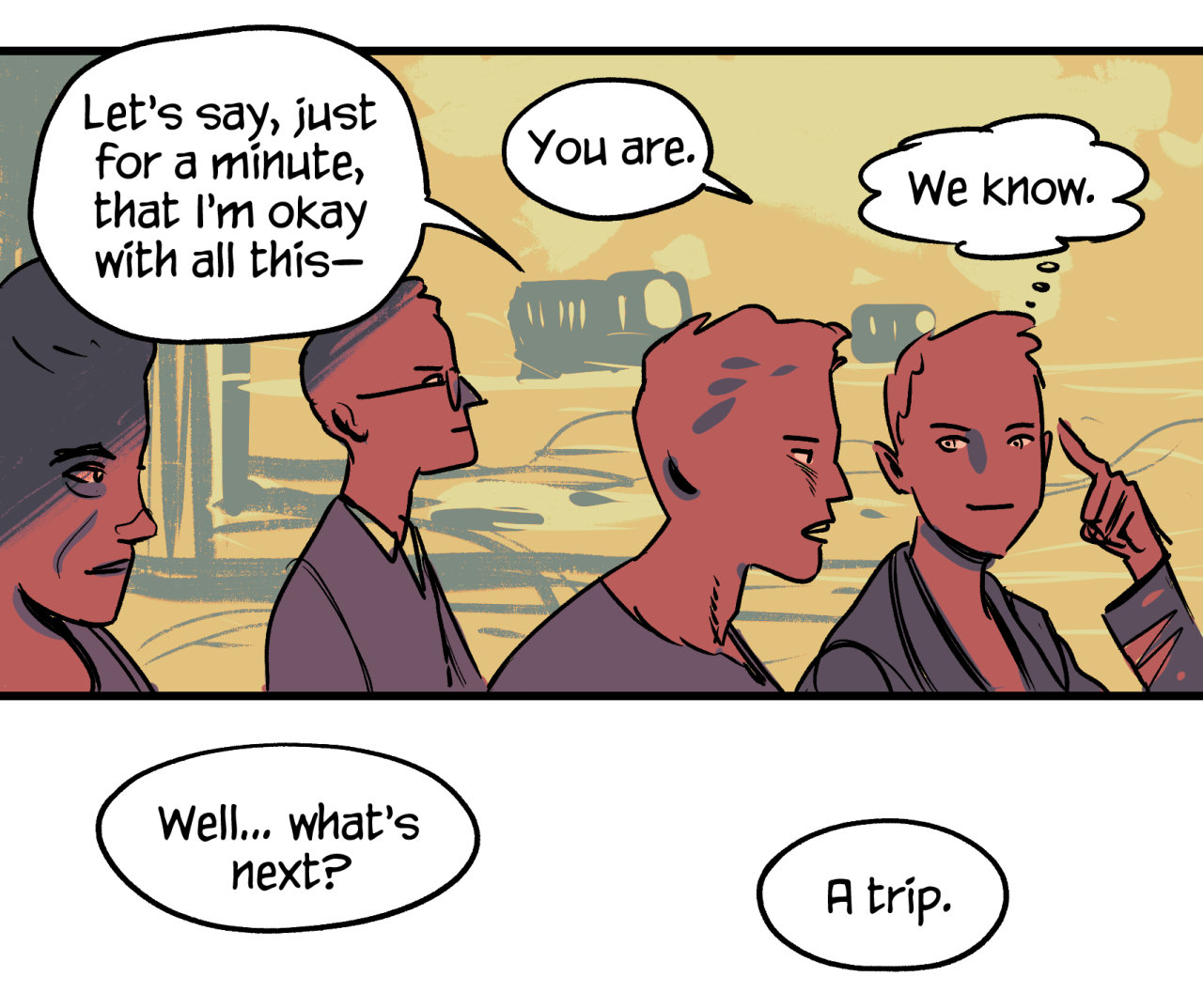
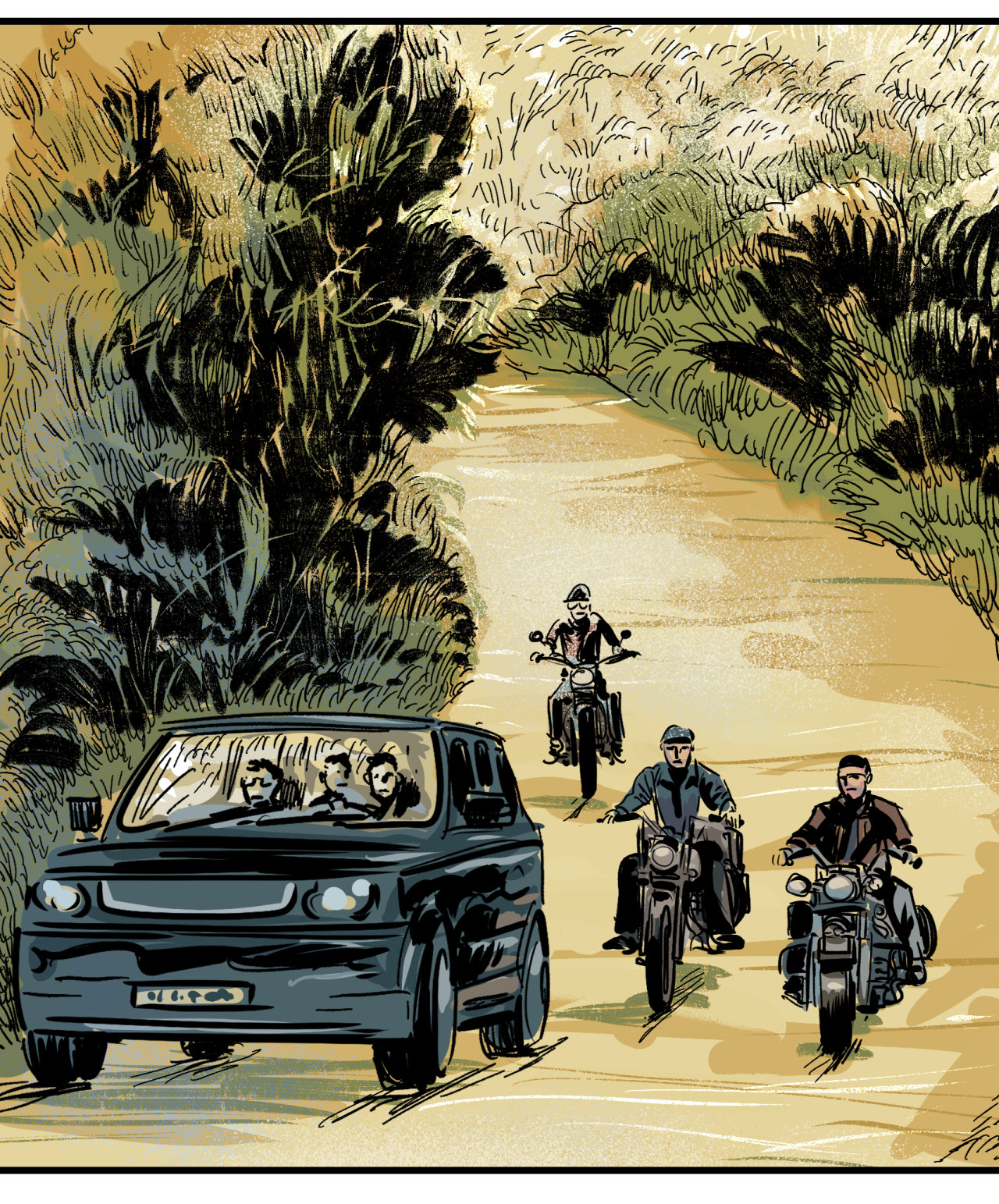
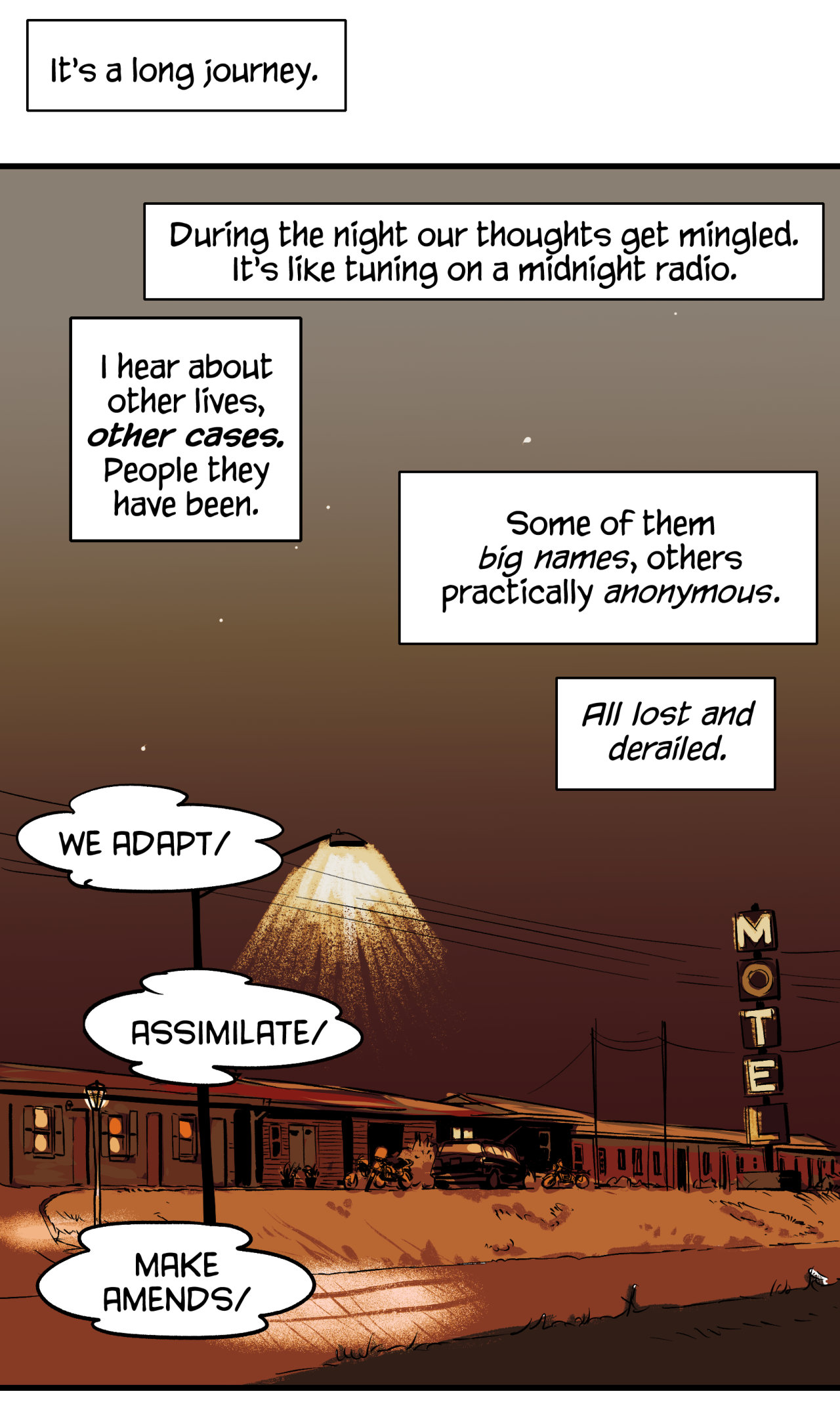
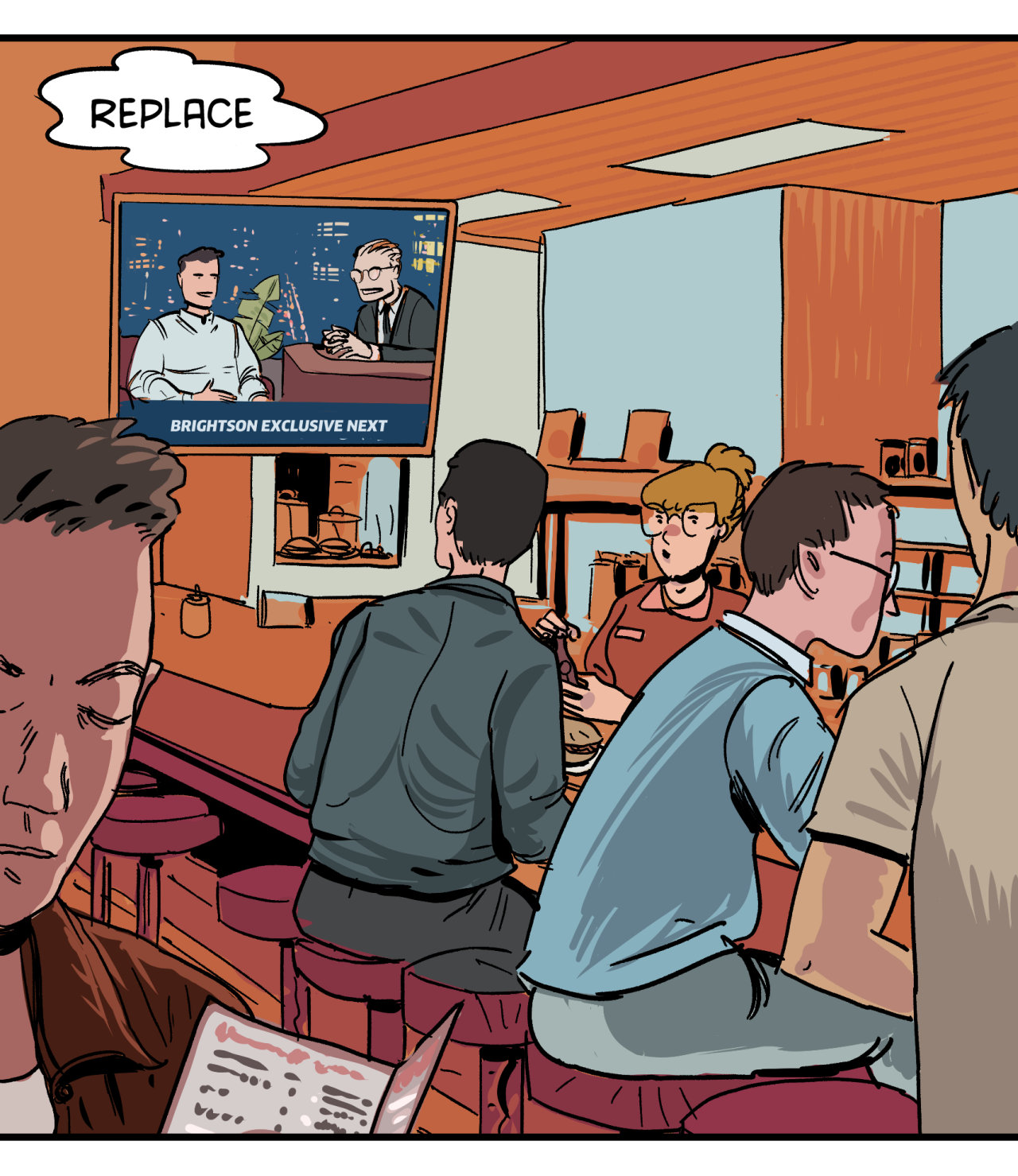
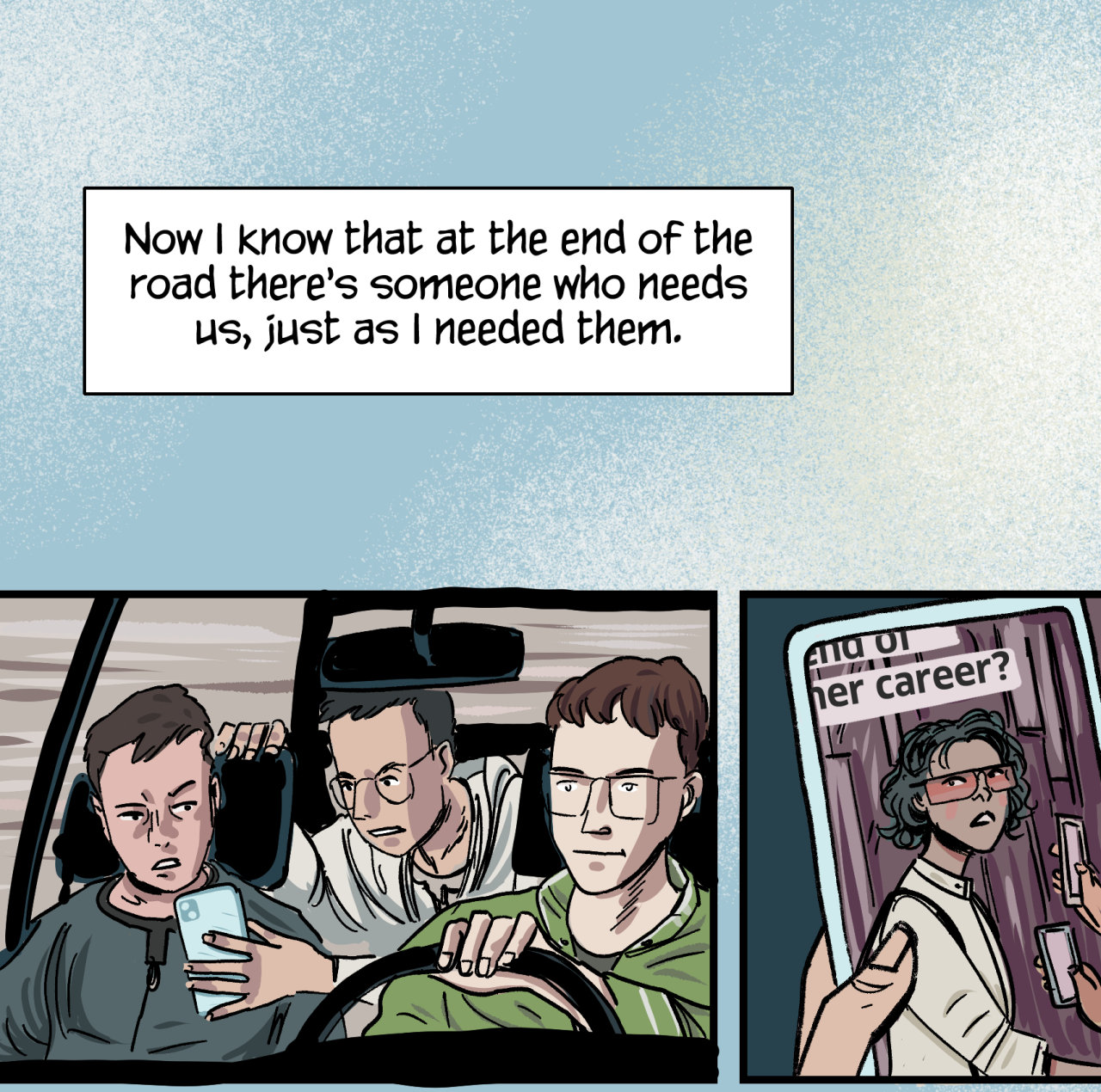
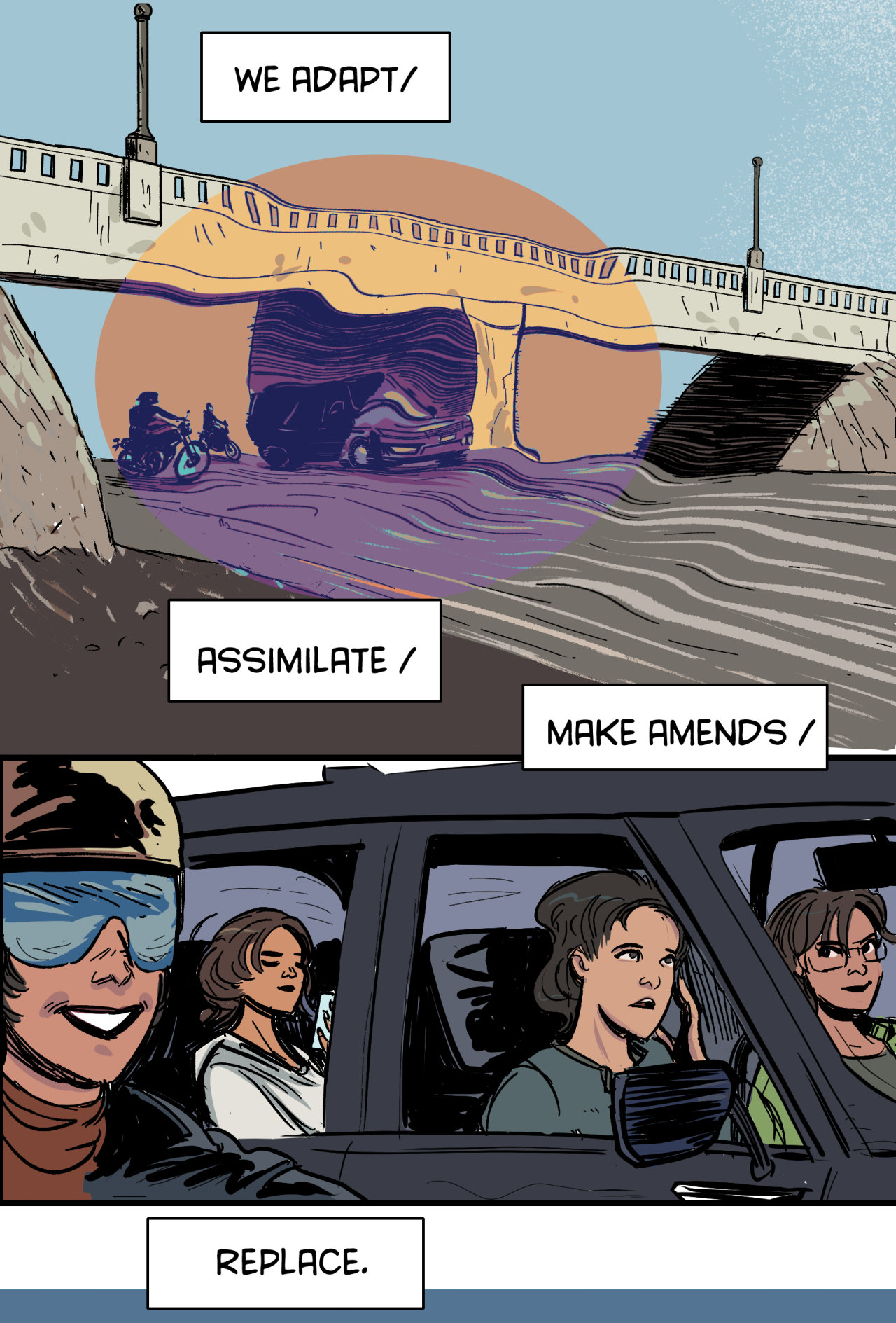
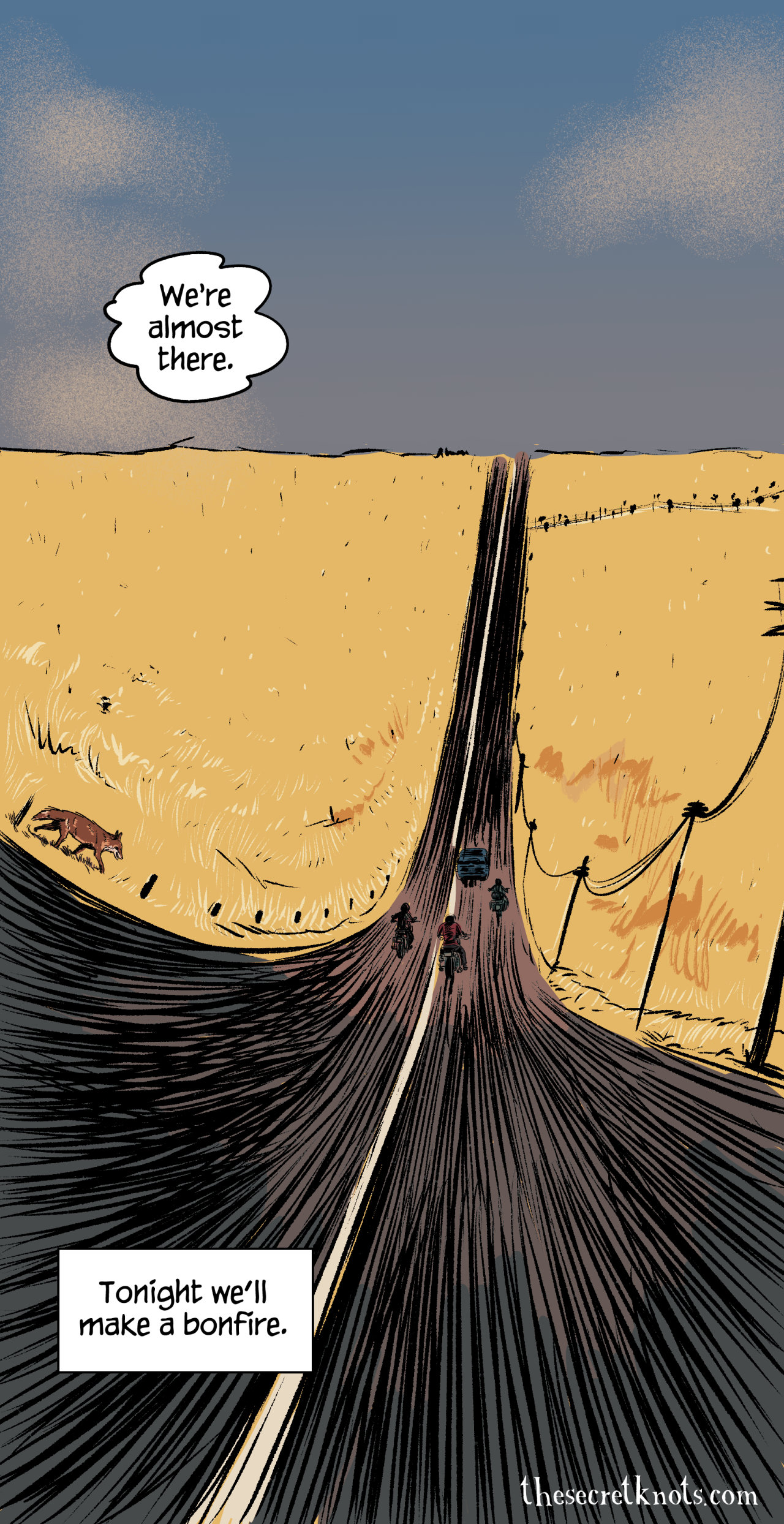
This week there are hunters, another human who embraced fully the inner wolf, and a conscious werewolf looking for help.
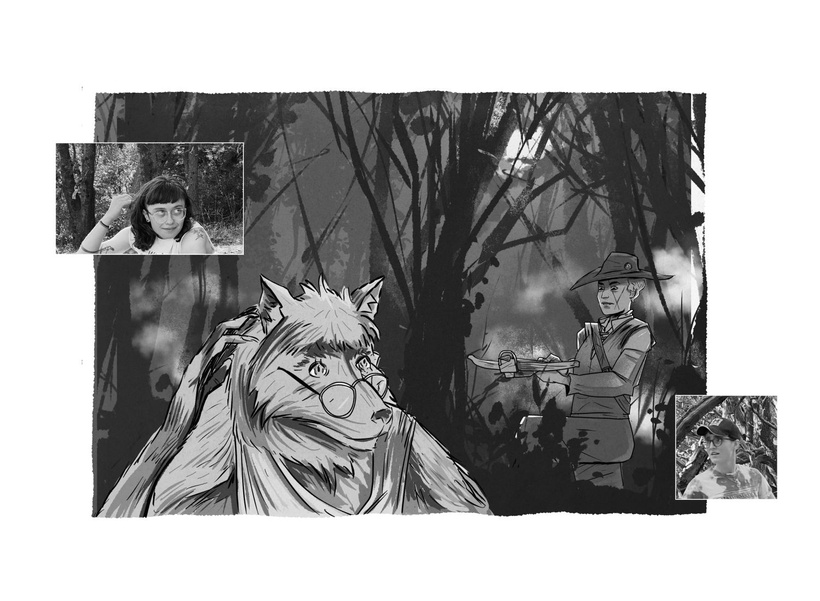
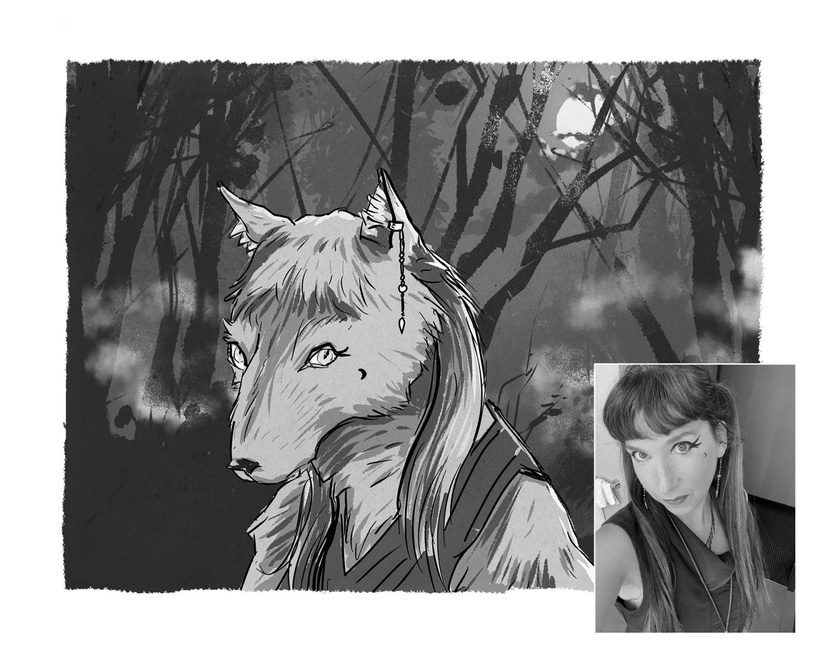
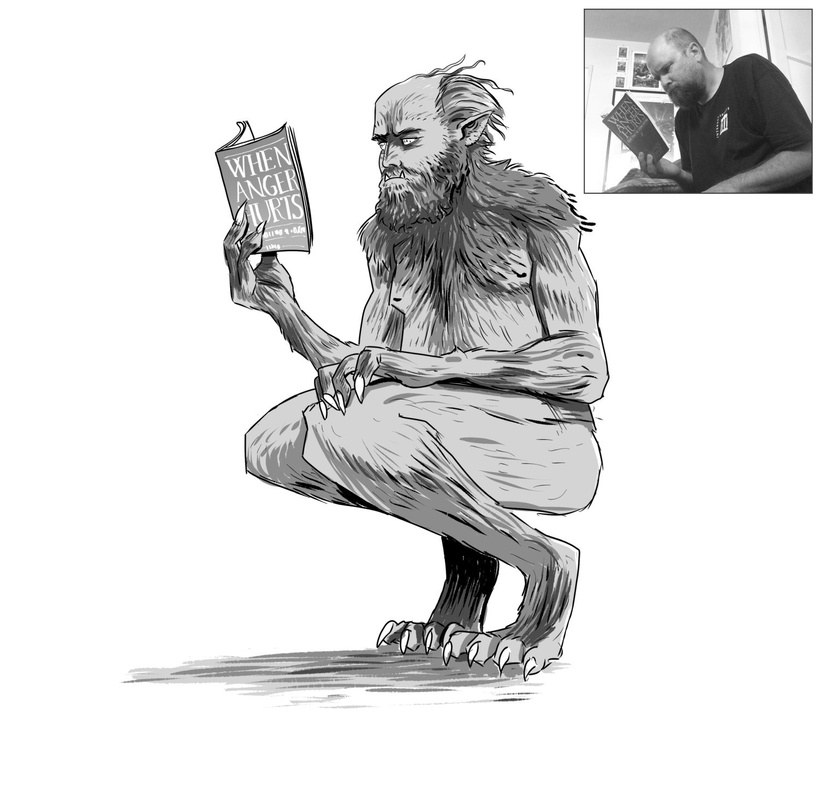

Comics by Juan Santapau

Comics by Juan Santapau
Final part of this Secret Knots story: The Battalion, part 3 of 3.
As usual, there will be some extra content on Patreon. Remember, if you subscribe now to tiers 3$ or up, you can get a Cyberpunk portrait! There's already a couple of portraits up there to check out.
Thanks!
Juan.
The dossier is a Patreon exclusive post with sources, references and details of world building, including ideas that were left only as background concepts. This one is about the comic In the Mirror.

The concept I wanted to use, initially, was the palimpsest. I’m fascinated by layered (and concealed) information, and the look of palimpsests also provokes in me a mix of attraction and a promise of ominous revelations. I guess it must be my catholic upbringing that makes me see apocalyptic plots whenever I see pictures of hidden messages in old parchments. In the related area of relics, I even find the look of the Turin shroud a bit sinister looking. I think these notions might be behind the quick turn to horror in the second part of the story, that goes from a vague, possible presence of devilish Faerie creatures in the painting, to an unseen menace that pends above all humanity perhaps, in the end.

Now, being comics a drawn medium, I shifted from written palimpsests, to the more figurative world of hidden sketches and meaning in classic paintings, which have, for me, the same aura of mystery, and a related look. Regarding this, the direct inspiration for this story was the restoration of “Girl Reading a Letter at an Open Window”, by Dutch painter Johannes Vermeer.

In several of his famous works, Vermeer has this game of layered compositions, reflections, a curtain concealing part of the picture, paintings within the painting. It makes me think of the depth in a boxed diorama. I tried to use some of these elements in the painting in the story, but the main influence was the fact that conservators found in “Girl…” a painting of Cupid in the wall in the background, which meant for experts a shift in the interpretation of the artwork: the girl was now reading a love letter. I really like this game of symbols, the change in the way we read the painting, and the critical discourse around it, so I wanted to put some of that energy in the talking heads of the experts in the comic; I tried to make them visually interesting characters as well. When the comic started to take much longer than expected, and threatened to become a “special effects” nightmare, I decided to make the drawing of what was left as motivating as possible, so I amused myself coming up with quirky characters in the audience of the auction, and finally, a bit like the baroque painters, who hid anamorphic skulls, tiny reflections and other puzzles and Easter eggs that could do well in modern point and click games, I drew myself (oh, vanity) among the crowd.

Only a couple of days after sharing the comic, they discovered a hidden Van Gogh early self-portrait in the back of one of his works. As I said on Tumblr, stay tuned for more arguably precognitive and slightly creepy comics.
After procrastinating for days on the fact that I was talking about a made-up baroque masterpiece and how am I going to draw anything resembling a skillfully made, left alone “classic” painting, by trying my hand at several failed attempts to give it a “comics” look, I said to myself, with the determined air of the main character in The Martian: I’m going to have to bullshit my way through this.

As you can see in this capture, I pasted several instances and cuts from Vermeer paintings, and started to paint by color picking his tones and applying them to my design, painting with Clip Studio oil tools.
Some things I found out with this exercise were: 1) Vermeer figures are graceful entities, full of life and movement. They are always caught in action: reading, turning back, taking a breath. This is pure drawing skill of the higher order, and is hard to replicate, as I painfully discovered with my stiff character.
2) I can’t imitate the rendering definition of baroque figures, or the play of lights on their skin, but I could give my forgery the aging craquelure of some of these paintings. I didn’t find any filter or ready-made texture that resembled the real thing, so I sampled the actual cracks in a painting, again by Vermeer.

3) Angles of mirror images are curious, and are hard to mentally project without a model. I started by simply copying and mirroring the original drawing of the maid, but that’s not how reflected perspective works, and in baroque painting, you may, perhaps, find that some faces are kind of odd looking, but perspective is tight. So I resorted to toy models for this task:

In the end, and after many hours, I deemed the resulting fake art as passable enough for the purposes of the comic. I’m glad I used a different style for the rest of the comic, so it gives the idea of the artwork as something of a different level of representation. I could go on editing and working on the painting probably, but I guess that’s a thought also in many painters’ heads when looking at their pieces, even for the masters of old.

This was the reference for the maid costume: I wanted a slightly exotic design, since I didn’t want to give the painter Sixtino Carral a precise location.

X-rays of Vermeer’s work used as reference for the ones in the comic.
The demonic creatures in the painting are from a Fairy Mirror realm, and the creature in the maid’s arms is an important omen child, product of a union of human and Fae. Its reveal to the humans world is the catalyzer of an impending doom. This is all, admittedly, very Rosemary’s Baby.
The Mirror world agent is likely a savior of our world: by recovering the forbidden art, they are trying to keep the realms apart, as it should be. The mirror mask acts like an astronaut helmet, it insulates them from our dimension. When they speak in mirrored text, it’s because the agent is at all times partially on their side, breathing their realm’s etheric air.
Phantasma Veritas, the Florentine secret society, is an apocalyptic cult, aware of the omen child. They are trying to bring the end times, as proper apocalyptic cults go. Carral belonged to one of their cabals in his youth, and later regretted it, once the painting was not in his possession. Years later, an unnamed hero, Carral’s young apprentice perhaps, vandalized the artwork, infiltrating the main chambers of a Swedish cultist king where it was hanged, but that’s another story.
***
I hope you enjoyed these notes. If you got this far, please leave a like, a comment, or feel free to add to, or rethink the headcanon as you wish.
Thanks to all patrons, and welcome, new subscribers! Your support makes the Secret Knots stories possible. Thank you very much.
Juan.
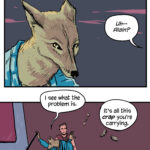
#159. The Battalion – part 3 of 3
11 Aug 16, 2026
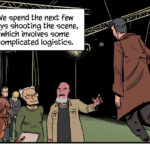
#158. The Battalion – part 2 of 3
51 May 26, 2026
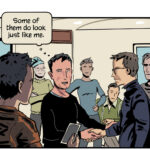
#157. The Battalion – part 1 of 3
72 Mar 27, 2026
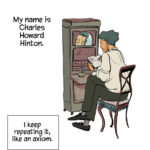
#156. Eighteen Eighty one
129 Jan 29, 2026
#155. Abyssal
115 Dec 17, 2025
#154. The Mesh
148 Jul 21, 2025
#153. Cryptid
25 Apr 23, 2025
#152. Cursive
36 Mar 04, 2025
#151. Content
25 Jan 22, 2025
#150. Remind me later
32 Oct 03, 2024